
How to Choose the Right Cement for House Construction
Introduction
Building a house is a major investment, and Choosing the right cement for house construction can help ensure that each stage of the building project uses a material suited to its specific requirements.. Among these materials, cement plays an important role in concrete, mortar, plaster and other construction applications. But with different cement types and grades available in the market, many homeowners ask the same question: How do you choose the right cement for your house? The answer depends on the type of work, structural requirements, project conditions and recommendations from your structural engineer or construction professional.

Why Cement Quality Matters in House Construction
cement for house construction acts as a binding material in concrete and mortar. When mixed with water and aggregates in the required proportions, it helps create the strength and stability needed for different construction applications.
However, buying a higher-priced or higher-grade product does not automatically mean it is the right choice for every application. The cement should be selected according to the project requirements and relevant specifications.
The Bureau of Indian Standards (BIS) covers different cement varieties, including Ordinary Portland Cement (OPC), Portland Pozzolana Cement (PPC), Portland Slag Cement (PSC) and other specialised products.
Cement for House Construction: Which Type Should You Choose?
There is no single cement type that is universally suitable for every construction activity. Common options include OPC, PPC and PSC.
1. Ordinary Portland Cement (OPC)
OPC is widely used for construction and is available in different grades. BIS currently lists OPC grades including 33, 43 and 53, along with certain special grades.
Its selection should depend on the structural design and application. For example, concrete work may have different requirements from masonry or plastering.
Instead of choosing a grade simply because its number is higher, discuss the required specification with your engineer or contractor.
2. Portland Pozzolana Cement (PPC)
PPC is a blended cement that incorporates pozzolanic material. It is commonly used in residential and general construction applications.
According to NITI Aayog, PPC can offer characteristics such as improved impermeability and resistance to corrosive conditions compared with conventional OPC in relevant applications.
For residential projects, PPC may be considered where its properties match the project’s technical requirements.
3. Portland Slag Cement (PSC)
PSC contains blast furnace slag and is another blended cement covered by BIS standards. It can be useful for specific construction environments and applications.
The appropriate selection should be based on factors such as exposure conditions, structural requirements and the advice of a qualified construction professional. BIS lists PSC under IS 455.
6 Factors to Check Before Buying Cement
Choosing a suitable product involves more than comparing prices. Keep these factors in mind before placing an order.
1. Check the IS Standard
Look for the applicable Indian Standard marking and product information on the bag. BIS maintains specifications for different cement types and grades.
This helps you verify that the product corresponds to the required standard instead of choosing solely on brand name or price.
2. Consider the Construction Work
Cement requirements can vary for RCC work, foundations, columns, slabs, masonry and plastering.
Ask your engineer or contractor which specification is required for each application. Avoid changing the recommended cement type without professional advice.
3. Check the Manufacturing and Packing Information
Before purchasing, check the bag for relevant manufacturing, packing, batch and standard information. Do not buy bags that appear damaged, torn or improperly stored.
4. Look at the Physical Condition
Cement should be free-flowing and should not contain visible hard lumps caused by moisture exposure.
If bags contain significant hardened lumps, ask the supplier for clarification before using them.
5. Consider Storage Conditions
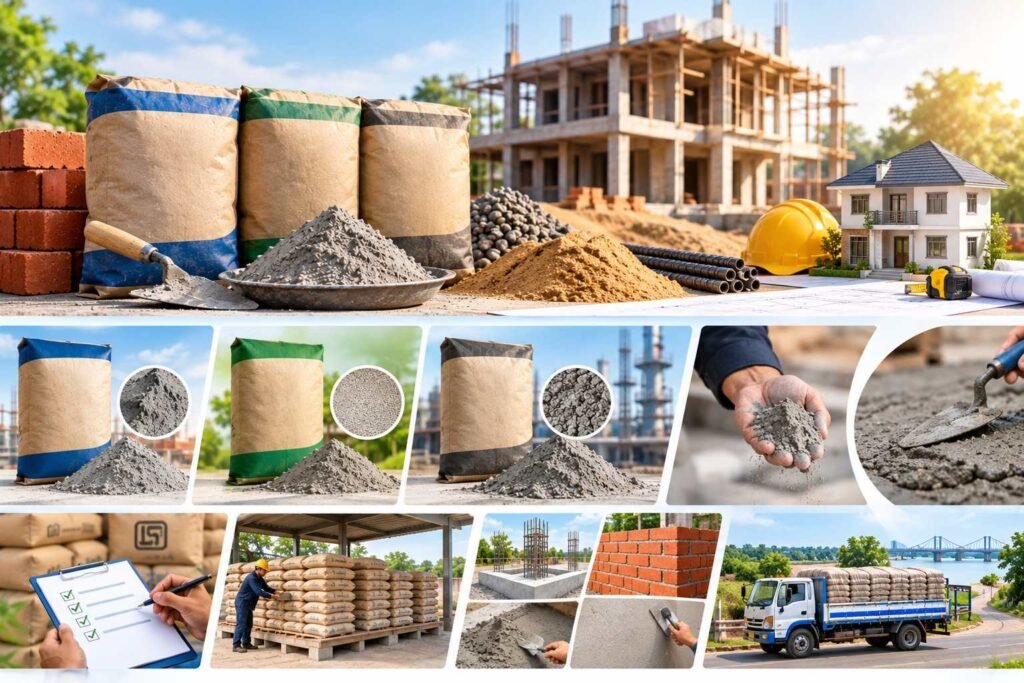
Even good-quality cement can be affected by poor storage. Bags should be kept in a dry, covered area away from direct contact with the floor and walls.
Protecting the material from moisture is particularly important during monsoon or humid weather.
6. Buy According to Project Requirements
Avoid purchasing large quantities simply because a supplier offers a discount. Before purchasing cement for house construction should be planned according to the construction schedule so that it can be stored properly and used within an appropriate period.
Common Cement Buying Mistakes to Avoid
Homeowners sometimes focus only on price while selecting construction materials. This can lead to unsuitable choices.
Some common mistakes include:
- Selecting cement only because it is cheaper
- Choosing a grade without checking the structural requirement
- Buying damaged or moisture-affected bags
- Mixing different products without professional guidance
- Storing bags in an exposed area
- Purchasing more material than can be properly stored
- Ignoring the applicable IS specification
A better approach is to compare product specifications, quality information, supplier reliability and project requirements together.
How to Store Cement Properly
Proper storage is an important part of maintaining material quality.
Keep cement bags in a dry and well-covered storage area. Place them on a raised platform rather than directly on the floor. Keep the stack away from walls and protect it from rain, water leakage and excessive humidity.
Follow the supplier’s storage guidance and use the material according to the construction professional’s recommendations.
Choosing Cement in Hajipur and Nearby Areas
For homeowners and contractors in Hajipur and nearby areas, availability and timely delivery can also be practical considerations when planning a construction project.
Ankit Traders supplies construction materials including cement for house construction, TMT bars, sand, stone, bricks, aggregates and other building materials, with delivery services covering Hajipur and nearby areas.
When comparing suppliers, consider product availability, applicable standards, delivery arrangements and the requirements provided by your construction professional.
Conclusion
Choosing the right material is an important part of planning a durable home. Instead of selecting cement based only on price or brand popularity, consider the application, applicable standards, storage conditions and technical requirements of the project. For important structural work, always follow the specifications provided by your structural engineer or qualified construction professional. A careful selection process can help you purchase the right material for your project while avoiding unnecessary waste and common buying mistakes.
FAQ
OPC and PPC are among the commonly used cement types in residential construction. The appropriate choice depends on the application, structural requirements and professional recommendations.
Not necessarily. A higher grade is not automatically the correct choice for every construction activity. Cement should be selected according to the project's technical requirements.
they live in Bookmarksgrove right at the coast
Store bags in a dry, covered location on a raised platform and protect them from moisture, rain and water leakage.
Check the bag's IS standard information, packing details, condition and manufacturing information. Avoid damaged or moisture-affected bags.
